DigitalTwin
Global machines/robots can be easily and quickly built through edge devices to build DT & metaverses, and introduced quickly and reasonably as intelligent cloud SaaS.
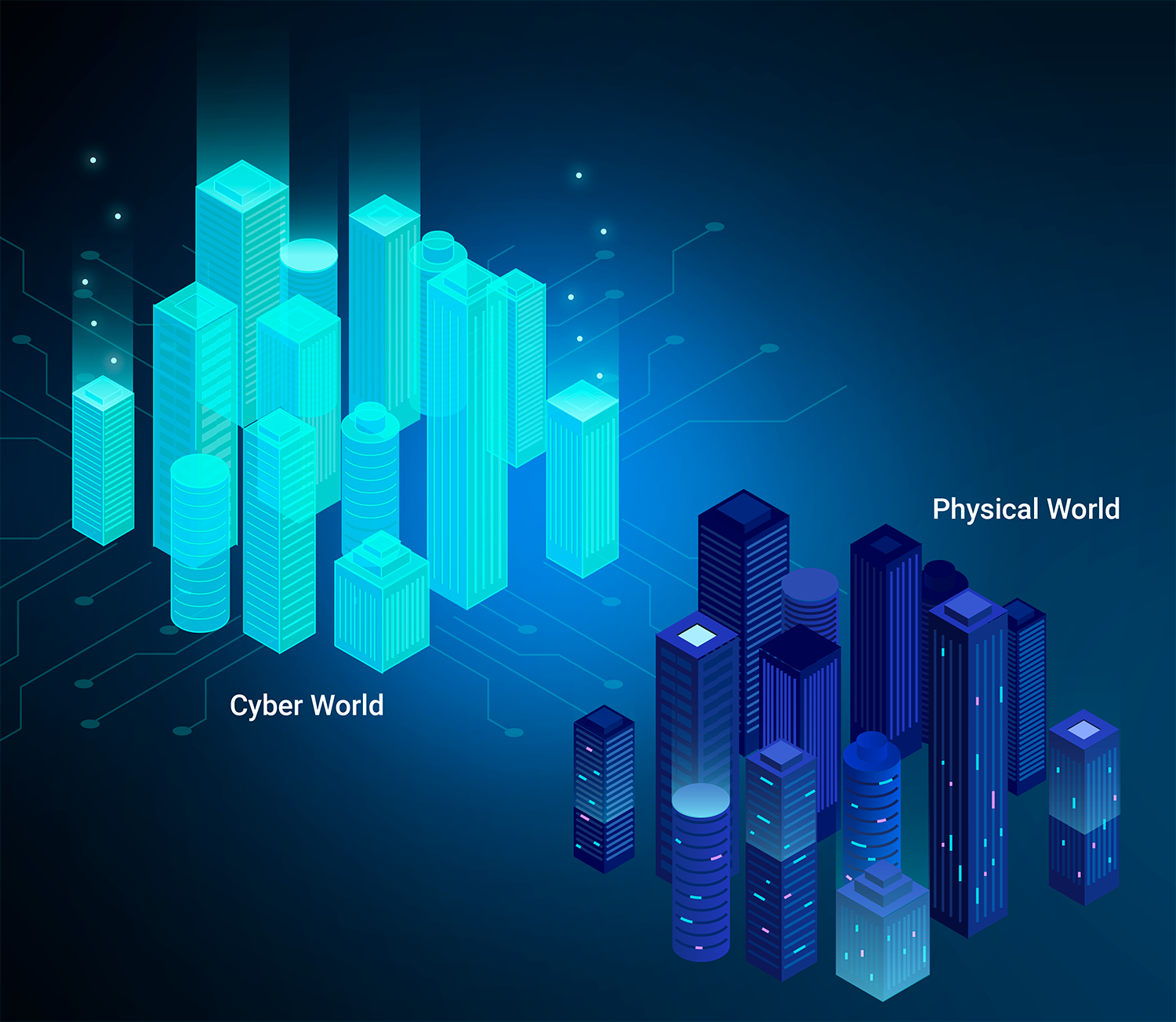
Digital Twin
- A concept created by General Electric (GE) that represents a virtual model identical to a physical object on a computer.
- Edge Computers allow you to convert older equipment or its control devices to support modern protocols such as MQTT, OPC UA, or Jetson.
- By creating a digital twin of a virtualized asset using software instead of the actual physical asset and conducting a simulation, accurate information about the characteristics of the actual asset (current state, productivity, operating scenarios, etc.) can be obtained.
- Digital twins can be used across a wide range of industries, including energy, aviation, healthcare, automotive, and defense, to improve efficiency across all processes, from design to manufacturing and service, including asset optimization, accident mitigation, and increased productivity.





Digital Twin Industry
Tabus Virtual Factory
- Integrated management of factory buildings, facilities, and lines
- Control and real-time monitoring through integration with various FLEXING platforms
- Simulation results for production facilities and warehouse management, changes in production equipment conditions, etc.
Real-time control of industrial robots
- Real robot sensing data time difference within 10 m/s
- Actual robot position data error within 5mm
- Centralized Robot Data Management
- OPC UA-based standardization of heterogeneous robots
3D digital twin
- Monitoring through real-time linkage with various plants, facilities, and IoT devices.
- 3D comprehensive visualization of large plants
- Provision of spatiotemporal information and on-site safety management
- Plant Operation Simulation and Visualization
5G-based digital twin
- 5G-based remote metering system digital twin web visualization
- Real-time operation, maintenance system, and information management based on digital twins
Digital Twin Construction Case Study
simulation tool
Simulation
A process of designing a model for a real-world system and using this model to evaluate various operational strategies for the system's operation or to conduct experiments for the purpose of understanding the system's operation. A process that integrates modeling and simulation into one, including the Simulation Modeling process. A series of processes related to expressing a real-world system as a valid model, constructing (configuring and coding) the model using a computer program, and then generating correct model data through statistical analysis
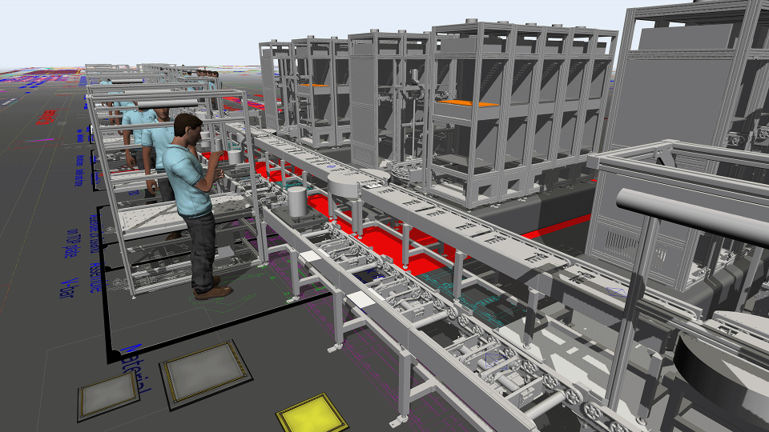
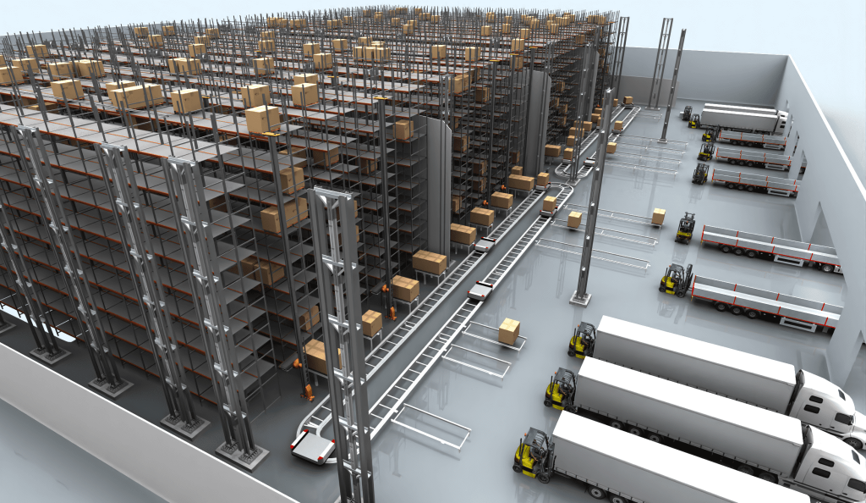
Definition of 3D Simulation
Within a production system comprised of diverse components such as workers, machines, and raw materials, various inefficiencies arise. If the production system is not operated properly, problems such as bottlenecks or excessive machine idleness can arise. To ensure smooth operation of the production system, it is necessary to continuously identify these problems and, if necessary, improve the system to reduce or eliminate them.
Performance measures (PMIs) are quantitative indicators that demonstrate the efficiency of a production system. While managers at production sites typically hope to identify problems by measuring the values of these PMIs, this can be challenging.
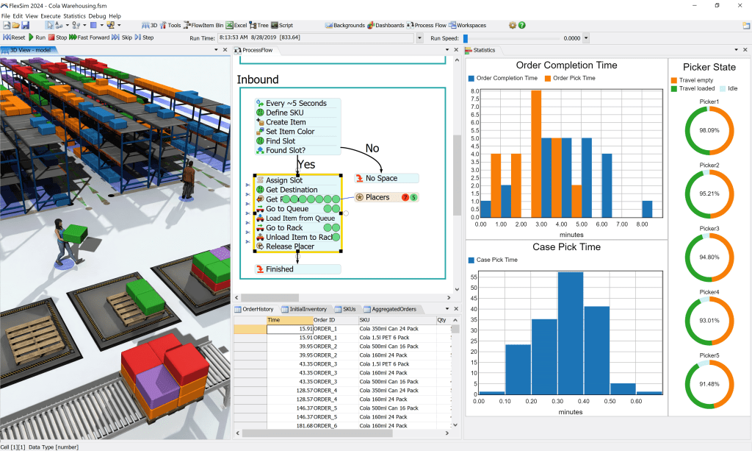
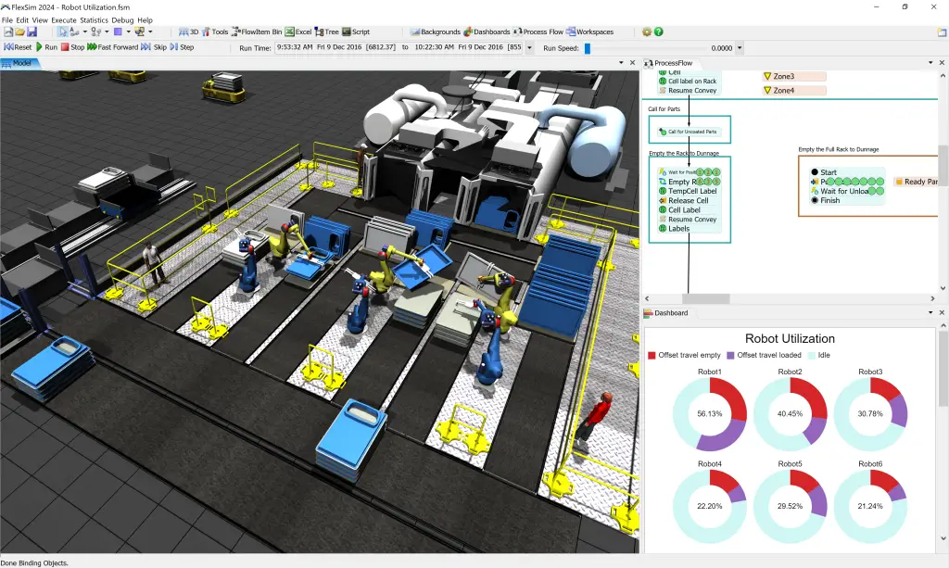
Visualizing performance measures such as throughput, waiting time, queue length, utilization, and lead time, and creating a virtual production system, allows for convenient execution and calculation of performance indicator values.
Furthermore, using simulations, it is not difficult to estimate the performance indicator values when the current system is changed or improved.
Simulation is a series of tasks that utilize tools to analyze and improve these measures.
Source: Handbook on Modeling Production Systems Using 3D Factory Simulation
Performance Measure Analysis
Performance indicator analysis
Source : FlexSim Tutorial