Supply chain management is about achieving maximum performance from the limited resources available across the chain — the connected structure that runs from suppliers to end customers — formed to deliver a target product or service.
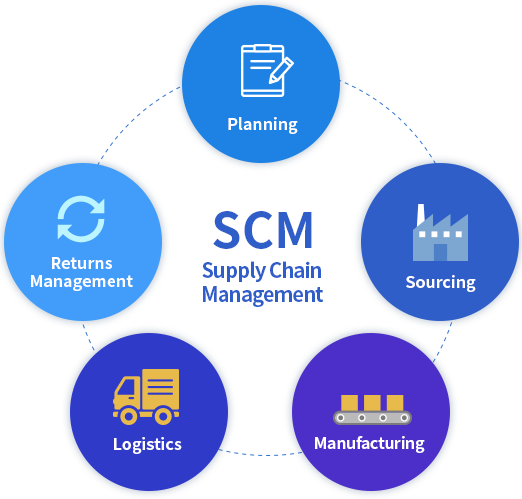
Supply Chain Management (SCM) refers to efficiently managing the entire process — the supply chain — from the procurement of raw materials to delivering the final product or service to the end consumer.
The key is optimizing a wide range of processes so a company can supply products quickly while cutting costs and maintaining quality.
Forecasts demand to plan production and inventory levels, comprehensively factoring in supply capacity and inventory data at this stage.
Selects and negotiates with suppliers for raw materials and components. The sourcing strategy determines quality, cost, and lead time.
Processes raw materials into finished products. Equipment and workforce are operated according to the production plan, alongside quality inspection.
Transports and stores finished products safely and efficiently on their way to the consumer. Logistics optimization is directly tied to cost savings and on-time delivery.
The process of handling defective products or returns logistics. Fast returns processing raises both customer satisfaction and inventory management efficiency.
SCM (Supply Chain Management) is an essential element for companies to produce and deliver products or services efficiently. A well-managed supply chain delivers a wide range of benefits, including cost savings, improved customer satisfaction, and stronger competitiveness.
Optimizes inventory levels to prevent both excess stock and shortages.
Shares, integrates, and tracks data across the supply chain in real time.
Forecasts market demand to coordinate production and inventory planning.
Analyzes costs across the supply chain and develops ways to reduce them.
Improves product quality and delivery times to raise customer satisfaction.
 Blog
 YouTube

 Naver TV
 Naver Clip