A machine interface is the method — or the connecting device — used to exchange data between production equipment (machines) at a factory or manufacturing line and an upper-level system (e.g., MES, ERP, SCADA, PLC, IoT gateway, etc.).
 Data Collection
Delivers real-time data from equipment (temperature, pressure, speed, operating status, etc.) to upper-level systems.
A feature that lets MES, SCADA, and ERP receive equipment status.
 Equipment Control
Upper-level systems send work instructions to equipment (upstream process, repair, work conditions, etc.).
Equipment parameters can be set remotely.
 History & Quality Management
Stores and tracks data generated by equipment (values, quality figures, etc.).
Supports traceability.
 Alarm & Event Management
An alert is triggered when an anomaly occurs on the equipment → the operations system can respond immediately.
A PLC (Programmable Logic Controller) is the controller most commonly used for automatic control of production equipment on the shop floor — a control device that processes information acquired through digital, analog, and communication signal inputs in whatever way the user requires, then outputs it via digital, analog, or communication methods.
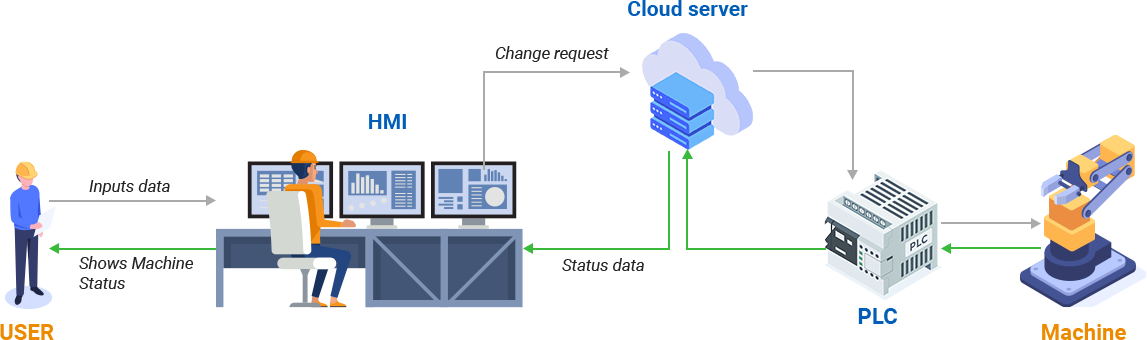
A PLC operates by having a program written using computer software or a dedicated loader, then transmitted and run through one of various communication methods.
Depending on the module configuration, general-purpose communication that's easy to use from a computer can be used — so when a PLC serves as the equipment's controller, it can interface easily with a computer via standard communication.
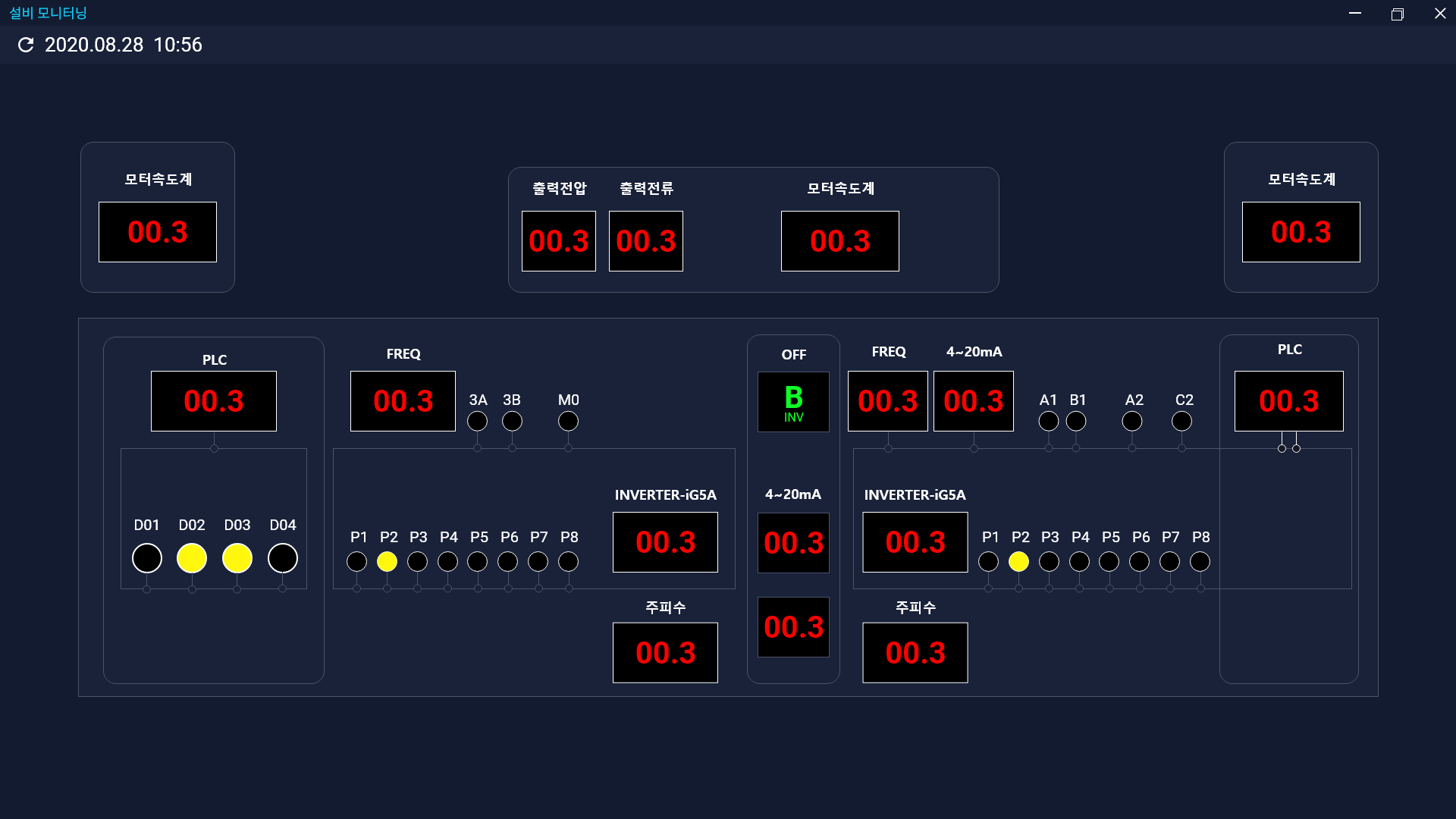
Because a PLC processes input information through a program the user has written, when MES wants to acquire that information,
the PLC program must be interpreted, and since communication protocols can differ by manufacturer and product, the interface method between the computer and the equipment must be chosen from among several approaches.
 Blog
Blog YouTube
 Naver TV
 Naver Clip