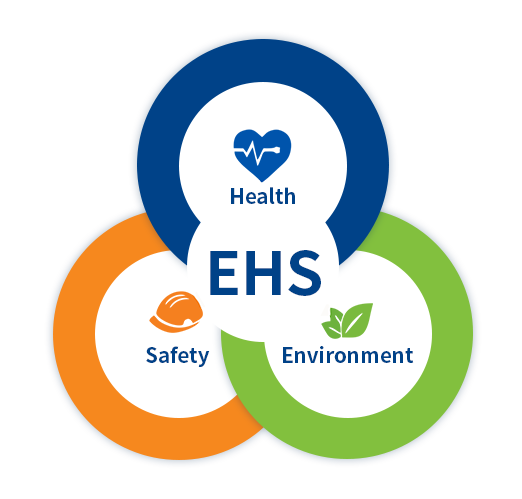
Environment, Health and Safety (EHS) is a comprehensive, multidisciplinary field focused on protecting human health and the environment across settings such as workplaces, communities, and public spaces. EHS's core goal is to identify and mitigate potential hazards, prevent accidents, and build safe, healthy living and working environments.
Government EHS agencies — such as the U.S. Environmental Protection Agency (EPA) and the Occupational Safety and Health Administration (OSHA) — issue EHS regulations to strengthen compliance with standards that collectively promote environmental protection, occupational safety, and health and wellness. International bodies such as the International Organization for Standardization (ISO) similarly develop standards and certify organizations that comply with them.
In some regions and contexts EHS is also called HSE (Health, Safety and Environment); it's often referred to by other similar abbreviations as well — EHS, SHE, OHS, WHS, QHSE, HSSE, and more — all pointing to the same field.
Focuses on protecting the environment from pollution and degradation. This includes monitoring and controlling factors such as air quality, water quality, soil contamination, and waste management. Environmental management and protection measures aim to reduce the negative impact of human activity, emissions, and hazardous substances on ecosystems, wildlife, and natural resources.
Workplace safety protects the health and wellbeing of workers on the job. This includes identifying and mitigating potential hazards that could cause injury, illness, or accidents to employees. Occupational safety measures build a compliant work environment by providing proper personal protective equipment (PPE), training employees on safety programs, conducting safety inspections, and implementing safety procedures. In 2021, 5,190 workers in the U.S. suffered fatal occupational injuries, and EHS measures aim to bring that number down.
Focuses on promoting the overall health and wellbeing of stakeholders and communities. This includes addressing public health issues, conducting health risk assessments, monitoring disease outbreaks, and implementing health-promotion programs.
 Blog
 YouTube

 Naver TV
 Naver Clip