A warehouse management system, or WMS, is — true to its name — a system that efficiently manages fulfillment activities within a warehouse or distribution center. It aims to manage and optimize resources such as warehouse space, unloading equipment, and staff; track detailed, real-time inventory status including both on-hand and in-transit stock; and support every activity carried out within the distribution center, from shipping and receiving to picking. By using technologies such as barcodes and RFID to automatically collect and analyze logistics data, it improves data accuracy and boosts productivity and efficiency throughout the warehouse.

WMS touches every activity involved from the moment goods enter a warehouse until the moment they leave. The specific steps naturally vary from warehouse to warehouse and company to company, but the core flow remains the same.
First and foremost is WMS's central function: real-time tracking of inventory storage and movement within the warehouse. This includes receiving goods, pinpointing product locations within the warehouse, and managing inventory levels. By using automatic identification and data capture (AIDC) technologies such as barcodes and RFID, it not only tracks and optimizes inventory levels precisely but also uses the accumulated data to provide insight for demand forecasting and inventory optimization. It can also analyze and determine the most efficient storage location based on attributes such as size, weight, and expiration date. Once inventory levels and forecasts are established, WMS ensures products are received, processed, and put away in the most efficient way. Even today, some smaller warehouses still reconcile orders and receipts by hand — WMS automates this, reducing errors and saving time.
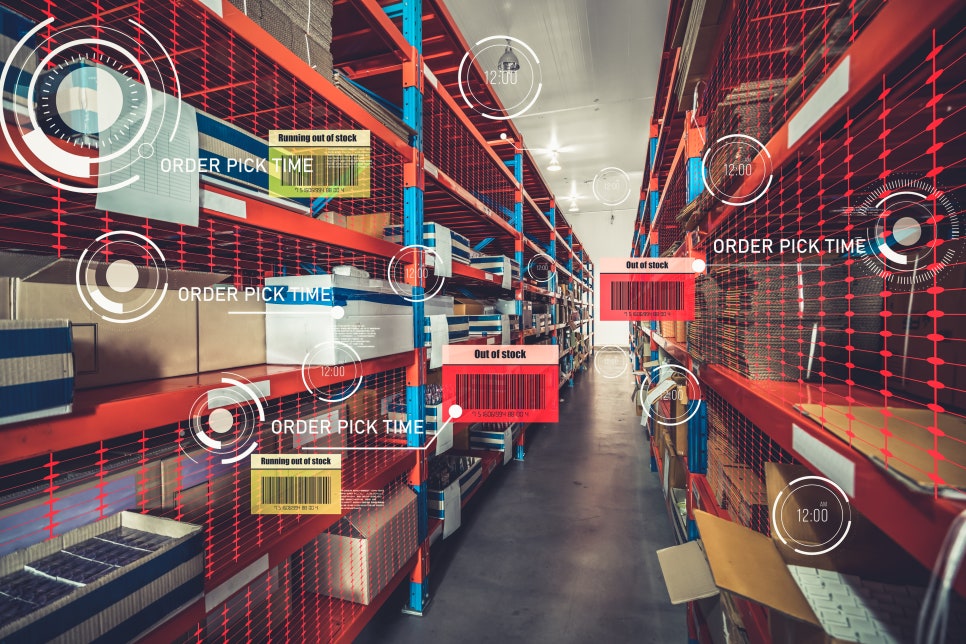
According to a Logistics Magazine survey, when asked where fulfillment activities — including packaging — happen most, 49% of respondents said "the warehouse." That means nearly half of all respondents manage picking, packaging, and shipping right inside the warehouse. WMS streamlines the picking process, minimizes errors, and significantly shortens order-processing time while optimizing the use of labor and resources — ultimately reducing costs and delivering a higher level of service.
In this way, WMS is a system that builds a smooth workflow by tracking and visualizing real-time data on inventory levels, location, and order processing. It can also be linked with various automation systems — conveyor belts, robots, automated storage and retrieval systems (ASRS) — to build out warehouse automation. And like other solutions, it can be integrated with an enterprise resource planning (ERP) system, or with a transportation management system (TMS) or supply chain management (SCM) system closely tied to the warehouse, to ensure smooth data flow and unified data management.
WMS is not simply the introduction of a new technology — it is a way to fundamentally reform how operations run from a long-term perspective, cutting costs and boosting efficiency across many areas. The key benefits of WMS include the following.
First is improved operational efficiency. WMS not only streamlines every warehouse process from receiving to shipment, but also lets you see work at a glance as it flows through the system. Because tasks once handled manually are automated, human errors such as miscounting inventory are reduced, while duplicate or unnecessary work is eliminated, allowing tasks to be processed faster. Inventory management also helps prioritize items for picking based on expiration or use-by dates and identify obsolete or deteriorated stock, preventing situations where capital is tied up in excess inventory or sales are lost to stockouts — improving inventory accuracy and driving down overall costs.
Real-time data visibility is another major benefit. Because it provides useful analytical information by tracking warehouse conditions in real time, you can respond quickly even to unexpected problems. By tracking product movement with automatic identification and data capture (AIDC) technologies such as barcodes, RFID, and sensors, you can improve the accuracy of demand forecasting, maintain just-in-time (JIT) inventory, and respond to recall issues. Over the long term, this helps increase customer satisfaction, build trust, and improve brand reputation.
In addition, WMS provides reports and analysis — including data records and metrics on warehouse performance — that generate valuable insights.
A properly built WMS brings real-time inventory visibility, automated and optimized warehouse operations and processes, cost reduction, and valuable insights. It can also be integrated with other tools — a transportation management system (TMS), an enterprise resource planning (ERP) system, a supply chain management (SCM) system — to maximize efficiency across your entire business operation. Get in touch with Innobase, a solutions provider that takes full responsibility for a total service — from consulting to implementation and operation — tailored to your business environment for building a smart factory. With extensive experience and proven technical expertise, we'll help you implement the WMS best optimized for your business.
 Blog
Blog YouTube
 Naver TV
 Naver Clip