TFE,
together with Innobase, computerized every stage from development planning through product shipment, and advanced its smart factory capabilities — including a project management system, MES, and QMS — to improve operational efficiency, quality, and customer satisfaction.
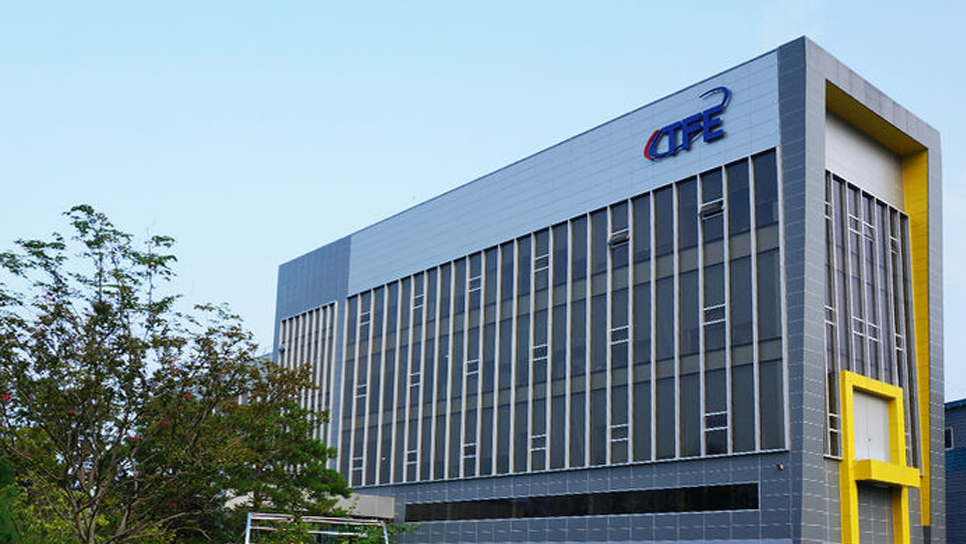

Founded in 2003, TFE provides total solutions for the test process — the stage following semiconductor device assembly in which individual device performance and interaction with surrounding components are verified. The test process is a critical stage that determines the quality of the final end product. Each of its sub-processes shares a common structure built around the test system, test handler, and test resources needed for mass production, and TFE supplies all of the test resources required across these four sub-processes.
Test resources are non-standard items that must be custom-built to match each semiconductor device's shape, electrical performance, and functionality. They represent one of the three core elements of the semiconductor test process that requires continuous investment, making mass-production-oriented development, organizational scale, and a strong track record of project experience essential to the field. Test resources consist of three components — test boards, test sockets, and COK (Change Over Kit) — and TFE is the only company in Korea that supplies all three across all four sub-processes, giving it a distinct competitive edge. In particular, TFE serves as a bridge between specialized companies across the semiconductor industry — from domestic and international chip design firms and mass-production specialists to assembly and test subcontractors — in the memory and system semiconductor markets, which together account for over 90% of the entire semiconductor market, delivering its differentiated test solutions to these customers. TFE has also obtained international certifications including ISO 9001, 14001, 45001, and 27001 to align with the direction of the domestic and global semiconductor industry, strengthening its international competitiveness in quality, environmental safety, industrial health, and information security.
TFE serves as a bridge to specialized companies across the semiconductor industry — from domestic and international chip design, mass production, and assembly and test subcontractors — in the memory and system semiconductor markets, which together account for over 90% of the semiconductor market, delivering differentiated test solutions to these customers. However, as the only company in Korea supplying all three test resource components across all four sub-processes of semiconductor device manufacturing, and as the semiconductor market continued to expand, the volume of project information TFE needed to manage grew substantially, along with the need for stronger quality and on-site process management.
Version control for documents and drawings, along with schedule and deliverable management, was inadequate — design change information, item data, and E-BOM information were all managed manually, and design results were manually entered into downstream process systems. Because everything from work orders to shipment was handled manually, TFE also could not track operational status in real time, and the absence of management systems for equipment, inventory, yield, and quality meant that raw material receiving and issuing, along with inspection performance data, had to be entered by hand — resulting in operational losses. This manually managed data, in particular, was difficult to share, compounding the challenge of identifying and implementing improvements.
To comprehensively address these challenges, TFE partnered with Innobase to build a systematic management system and a real-time operating system.
Given the sophistication of TFE's processes and technical capabilities, building a project management system and an on-site process management system was essential. The scope of challenges to solve and processes to strengthen was substantial — reducing errors by managing drawing and document versions and history, shortening turnaround time by managing information and schedules, strengthening information linkage from production through purchasing, reinforcing information security, and improving operational productivity and quality.
The first area addressed was drawings, documents, and schedules. Project schedules had previously been tracked manually in Excel by individual staff, making it difficult to get an overview of progress. Drawings, documents, deliverables, and other materials for each project were also stored in folders on a NAS server, so checking a document's contents or revision history required opening the file directly — and for certain files, such as 3D drawings, the content couldn't even be viewed without dedicated software like 3D CAD. To resolve this, TFE actively considered adopting a PLM system, working together with Innobase and Jigyeong Solutech. Project schedules were computerized first, with a dashboard added to track project progress. Digitizing documents also made version control easier: all documents, including 2D drawings, were converted to PDF for preview, and 3D drawings could likewise be viewed on the web through a 3D CAD viewer.
Distributing drawings by collecting them and emailing them out had also led to omissions, sending errors, and untracked distribution history. Innobase addressed this by computerizing drawing issuance and distribution, so that drawings are approved and distributed through the system with approval and distribution history tracked automatically. The previously manual list of design changes was also computerized, with change details shared by email and linked directly to the relevant drawings and documents — resolving omissions and sending errors while reducing the time required and improving accuracy. Errors in item and E-BOM data that had likewise stemmed from manual management were addressed by managing approvals and versions through the system, and linking E-BOM information to MES in real time reduced the error rate and helped prevent project delays before they occurred.
Most of TFE's operations were carried out manually — including order and shipment data management, material requirements calculation (MRP), material ordering, material receiving, inventory (parts and products) management, and purchase/sales management. Innobase computerized these processes based on standard manufacturing process operating procedures, building a system to manage order intake by project, link each ordered product's E-BOM with MES to run MRP and purchase orders, manage material receiving and inventory, and aggregate purchase/sales closing data for management reporting — all through a single system. In particular, MRO management for maintenance materials and real-time inventory management through the system improved both data reliability and operational efficiency.
The lack of a system for collecting and monitoring equipment data in real time was causing operational losses. Without a preventive maintenance framework, breakdown maintenance had to be handled manually, and the absence of an alarm system meant threshold violations in process conditions went unnoticed — making it difficult to improve manufacturing stability and quality. To address this, Innobase built a real-time equipment monitoring and alarm system based on standard manufacturing process operating procedures, providing real-time production progress information for each product and triggering alarms whenever a process condition exceeded its threshold. As a first step, a misinsertion prevention system linked to the equipment interface was implemented to prevent manufacturing defects before they occur and to catch operator input errors, reducing defective products and increasing productivity.
The real-time equipment data collection and monitoring system also automatically gathers production performance and equipment measurement data, providing real-time visibility into equipment status while ensuring consistency between aggregated data and measured values, thereby improving operational efficiency. This improved visibility, in particular, drove up equipment utilization by about 5% compared to before implementation, while real-time sharing of preventive maintenance information and alarms strengthened manufacturing stability and quality, reducing the process defect rate by about 60%.
Production management also underwent significant change. Under the previous manual BOM process, establishing a material requirements plan against the production plan took excessive time or was frequently delayed. TFE also lacked production lot management, making traceability difficult and complicating the tracking of materials used per lot. Innobase first addressed the inability to utilize and share information under the manual process by installing operating equipment on the server and shop floor and building an MES that collects and shares on-site information in real time. Notably, the previously implemented MES solution had gone unused because entering downtime data (key-in) took excessive time and effort, so Innobase improved usability by configuring industry- and company-specific fields and allowing downtime to be entered via barcode or touchpad. PLC equipment was also introduced for the COK, socket, and board processes, replacing manual entry of production time, quantity, and conditions with real-time interface collection into a gathering PC, enabling real-time monitoring and efficient lot management — improving overall operational productivity.
TFE had previously entered and registered measurement values, inspection data, and inspection reports by hand — inevitably undermining data consistency and reducing operational efficiency. To address this, Innobase built a real-time quality data collection and monitoring system based on standard manufacturing process operating procedures. This system automatically collects quality data and performs analysis, and enables the sharing and management of incoming, in-process, and outgoing inspection data along with defect and claim information — reducing the process defect rate and, in turn, improving manufacturing stability and quality.
The semiconductor test process is a field whose importance keeps growing as chips become finer and more highly integrated, and TFE is the only company in Korea that supplies all of the core resources used in that process — test boards, test sockets, and COK (Change Over Kit). As the memory semiconductor market recovers and non-memory investment gradually resumes, TFE's need to systematically manage risk has grown as well.
Innobase accordingly organized the priority tasks to be addressed. It built a real-time operating system spanning the entire process from work order to shipment, along with equipment, inventory, yield, and quality management systems and a line operation status management system, and ensured data consistency while eliminating operational losses through real-time collection and monitoring of inspection performance data. In particular, the automated system prevented missed calibrations and incorrect quality judgments, driving quality improvements that translated directly into greater customer satisfaction. Systematic management of first-, second-, and third-party audit history and improvement measures also enabled TFE to pursue continuous improvement activities effectively and efficiently.
 Blog
 YouTube

 Naver TV
 Naver Clip