Hyundai Elevator,
together with Innobase, introduced an IT functional improvement solution into its Installation Division's operating system — maximizing the efficiency of customer service and information sharing, and laying the foundation for stronger on-site management capability.
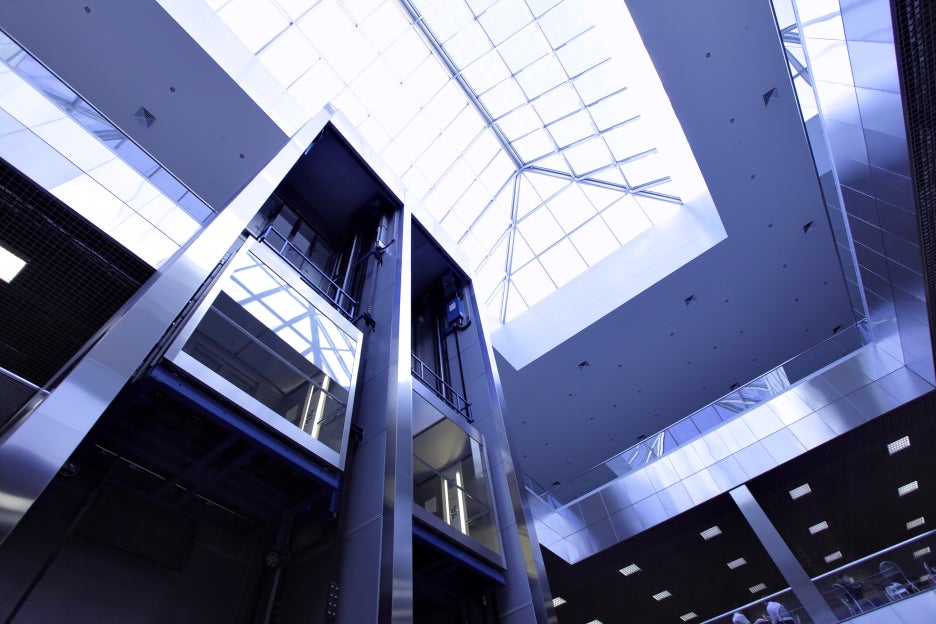

Founded in 1984, Hyundai Elevator delivers the industry's best mobility services — including elevators, escalators, and moving walkways — to provide the fastest, most convenient, and safest transit experience in step with evolving urban architecture trends. Notably, in 2002 the company launched its "Vision 2030" initiative.
Hyundai Elevator's Installation Division is responsible for the installation, maintenance, and safety inspection of elevators, escalators, and similar equipment. Playing a critical role in staying closely connected to the field — overseeing on-site installation, managing projects, and running safety training — the Installation Division worked with Innobase to significantly upgrade the efficiency of its existing operations.
FCM / MFCM — IT Functional Improvement for Hyundai Elevator's Installation Division
Hyundai Elevator is, without question, the No. 1 elevator company in Korea — so much so that it has been officially confirmed that the number of elevators the company manages exceeds the number installed across all of Seoul. With sites and projects of that scale and complexity to manage, the need to overhaul the operational efficiency of the Installation Division's systems was significant. At the same time, the speed of implementation was an equally critical factor that couldn't be overlooked. Drawing on extensive project management experience, Innobase worked to efficiently manage the resources deployed to meet the given deadline, budget, and quality targets. We sequentially analyzed the data and as-is state of each individual task, defined the to-be state, and then worked out the screens and specifications. Throughout implementation, we shared and reported progress at each stage, checking in on the direction of the system build, and completed all the work in roughly six months.
 Blog
 YouTube

 Naver TV
 Naver Clip